What Is the Short Answer on DIY Attic Water Damage Repair?
Homeowners can safely handle the first response: stopping the water if it is safe to do so, documenting the damage, and protecting belongings. The actual repair work, water extraction across a wide area, insulation removal, structural drying, and mold remediation, belongs to professionals. The line is drawn by safety: electricity, contamination, structural integrity, and mold exposure are the four hazards that turn a DIY project into a dangerous one. If any of those are in play, call a professional instead of climbing into the attic with a bucket.
What Can Homeowners Safely Do Themselves?
These tasks are within reach for most homeowners:
- Stop the water source if it is safe. Shut off the water supply to a leaking line, or place buckets and tarps under an active roof drip. Do not go on the roof during a storm or on wet shingles.
- Document everything. Take dated photos and video of the attic and any stained ceilings before anything is moved or cleaned. This supports insurance claims and helps contractors scope the work.
- Protect the living space. Move belongings away from the affected area, lay plastic sheeting over furniture, and place containers under drips.
- Improve airflow where safe. Open the attic hatch and run fans in the living space to move air, but do not aim fans at visible mold, which spreads spores.
- Find your shutoffs and records. Locate the main water shutoff, note the age of the roof, and gather insurance policy details so you are ready when help arrives.
Notice what is not on this list: pulling out insulation, cutting drywall, or treating mold. Those cross into professional territory. Coverage depends on the policy, the cause of the loss, exclusions, deductibles and the circumstances; we are not adjusters and cannot promise how your carrier will rule.
Where Does DIY Become Dangerous: Electrical Hazards?
Attics contain wiring, junction boxes, recessed light fixtures, and sometimes air handler electrical connections, all of which may be wet after water damage. Water and electricity are a lethal combination, and the danger is not always visible: a wire can be energized inside a soaked insulation batt you are about to grab.
The rule is simple. If wiring, boxes, or fixtures in the affected area may be wet, stay out and call a professional. If you must enter the attic for documentation, do not touch any electrical components, and if you see sparking, hear buzzing, or smell burning, leave immediately and call an electrician. Never assume a breaker you flipped killed every circuit in the attic.
What About Contamination and Mold Exposure?
Not all attic water is clean. Water from a roof leak is one thing; water from a sewage backup or a long-standing leak that has grown mold is another. Contaminated water carries bacteria, and mold releases spores that irritate lungs, especially during removal when colonies are disturbed. A paper dust mask from the hardware store is not adequate protection for mold remediation.
Professionals use containment barriers, negative air pressure, and proper respirators to keep contaminants out of the living space during removal. A homeowner dragging moldy insulation through the house in trash bags spreads spores to every room it passes. If you see visible mold growth or the water source may be contaminated, that is the clearest possible signal to bring in attic mold after water damage specialists rather than handling it yourself.
When Do Structural Risks Rule Out DIY?
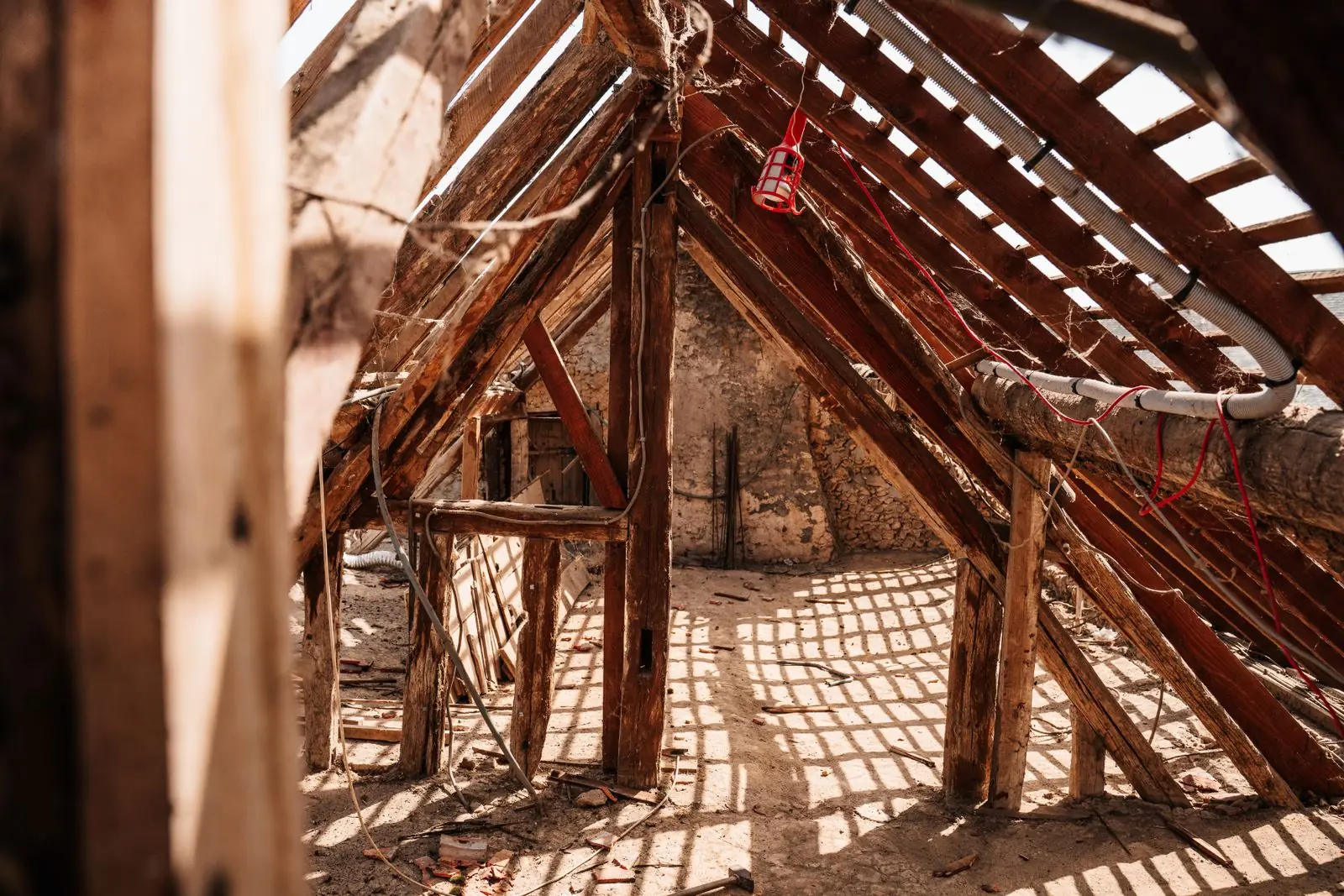
Water weakens the very surfaces you walk and work on. Saturated drywall can collapse under body weight, which is why stepping only on joists is critical, and even joists can be compromised after prolonged soaking. Sagging ceilings below the attic are a warning that the drywall is close to giving way.
Beyond the immediate danger, structural assessment requires judgment DIY cannot provide. Decking that looks intact may be rotted from the inside, rafter ends may be softened, and fasteners may be rusted through. Determining what must be replaced versus what can be dried is professional work, and it is exactly what attic structural drying and restoration services are built around. Our Texas attic water damage repair process starts with that structural assessment before any repair begins.
How Should You Decide: DIY or Call a Professional?
Use this decision test. DIY the first response if the water source is stopped or contained, the affected area is small, there is no visible mold, no electrical components are wet, and the structure feels solid. Call a professional if any of those fail: active leaking you cannot contain, wet insulation across a wide area, any mold, wet wiring, sagging drywall, or soft wood.
When in doubt, get an inspection. A professional assessment costs far less than a DIY job that spreads mold through the house, misses structural damage, or ends in an injury. Knowing where your limits are is not a weakness; it is the most important DIY skill of all.