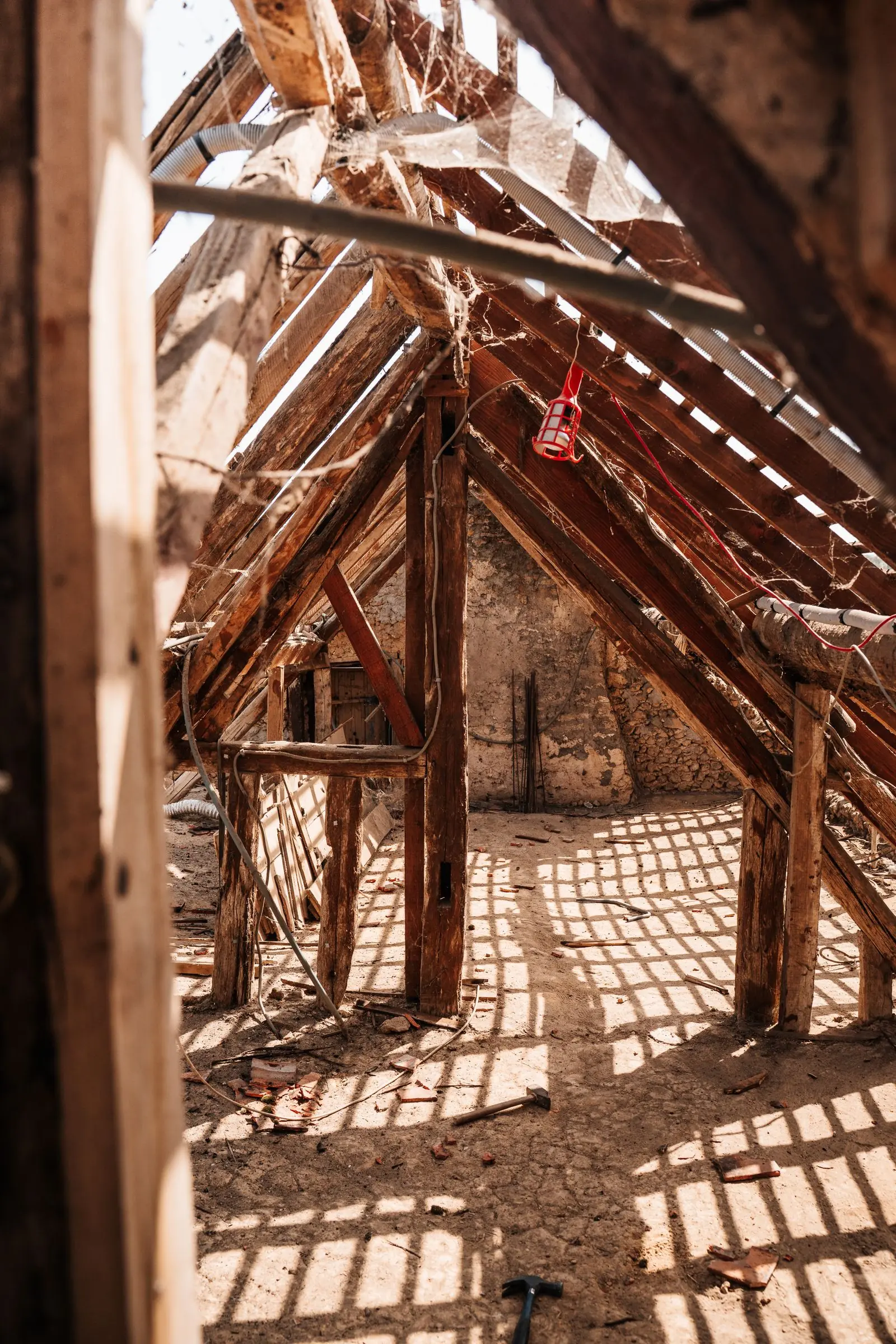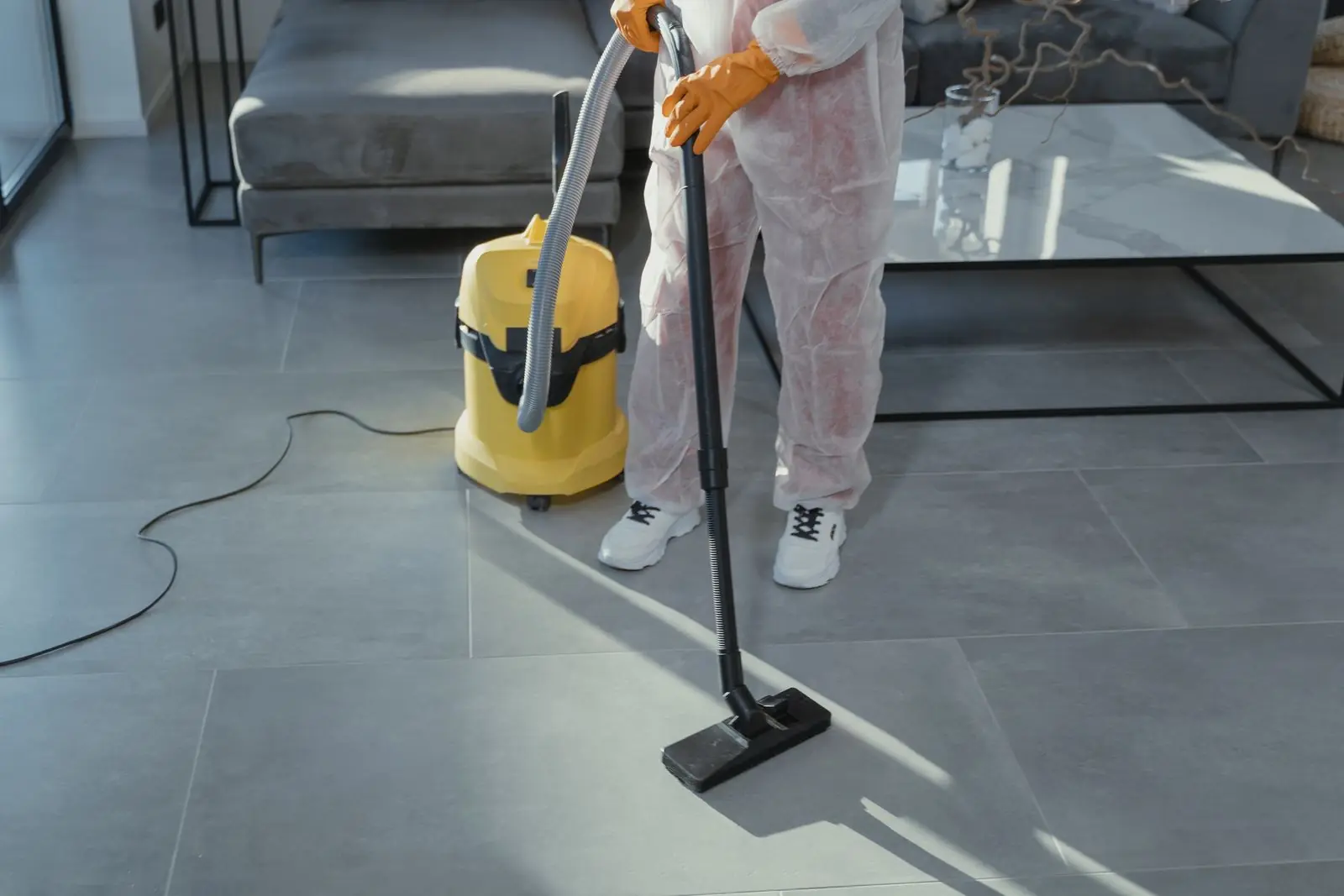
Attic Water Extraction
Fast standing-water removal for Cibolo attics using pumps and wet vacuums, plus guidance on what drying and cleanup follow next.
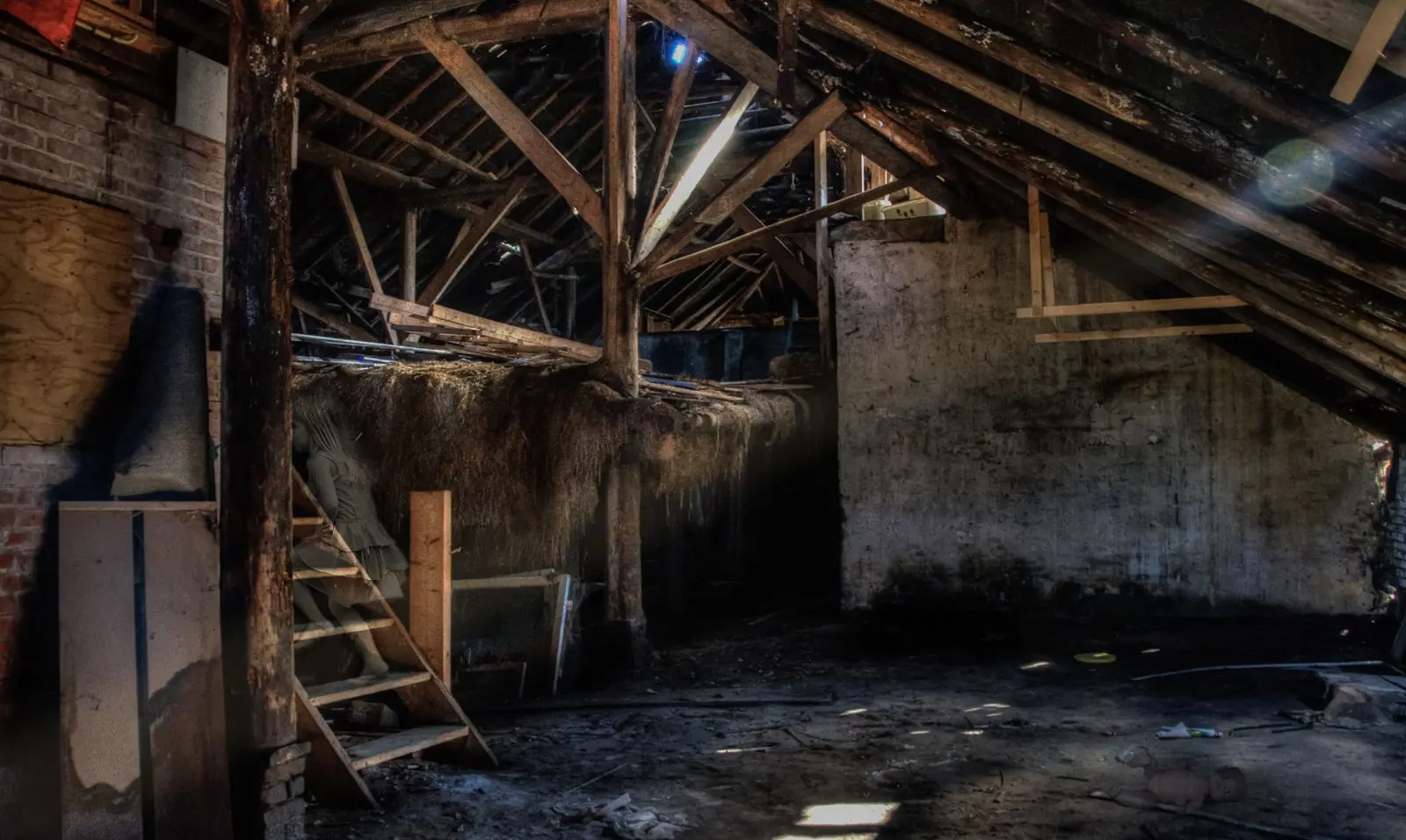
Urgent help for active attic leaks, storm damage, and burst pipes in Cibolo: immediate safety steps, damage control, and what emergency attic response covers.
Request an InspectionCall (888) 853-1821
Emergency Attic Water Damage in Cibolo, TX
Most homeowners discover an attic emergency from below: a spreading stain, a drip that becomes a stream, or the unmistakable sound of water running where it should not be. By the time it shows in the living space, the attic above has often been taking water far longer, and insulation saturated like a sponge is pressing that moisture against framing and the back of your drywall. In Cibolo, inspectors flag this before it spreads further.
That hidden head start is why emergency attic water damage in Cibolo gets treated as urgent even when the visible damage looks modest. What you see on the ceiling is a fraction of what the attic holds. MH Attics approaches every emergency call in Cibolo with full assessment: find the source, measure how far the water traveled, extract it, and stabilize the structure before secondary damage takes hold.
Not every attic leak is an emergency, but some cannot wait. An emergency is active, uncontrolled water entry: a burst supply line feeding water continuously, a storm that opened the roof deck, or a leak heavy enough to stream through the ceiling below. If you hear water running in the attic or see dripping in multiple places, you are past watchful waiting. In Cibolo, this observation comes up again and again after leaks.
These situations escalate because attics concentrate damage. Insulation acts like a sponge against framing and drywall, and a saturated ceiling can fail suddenly. In Cibolo, summer storms and winter freezes both produce attic emergencies, one by tearing the roof open and the other by bursting pipes in unconditioned runs.
If the source still flows, or the ceiling bulges, sags, or stains spread by the hour, treat it as an emergency. MH Attics provides emergency attic water damage service in Cibolo for exactly these moments, starting with source control and extraction.
Before professionals arrive, a few calm actions make a real difference: stop the water if you can do it safely, protect people and belongings below, and avoid making things worse. Do not climb into an attic with standing water, sagging decking, or water near electrical runs. In Cibolo, this observation comes up again and again after leaks.
What you avoid matters too: do not poke holes in a bulging ceiling, aim fans at a still-wet ceiling, or discard damaged materials before documentation. In Cibolo, emergency calls often come during storms, so Cibolo homeowners should stay clear of the attic until the weather passes.
An emergency visit is about stabilization, not the full rebuild. In Cibolo, the crew first stops or slows the source, then extracts standing water and removes insulation too saturated to save. Wet drywall threatening the ceiling below may be opened to release trapped water.
Once the immediate threat is controlled, drying equipment goes in: air movers and dehumidifiers sized to the space, with moisture readings taken to set a baseline. The team documents everything the water touched so the later restoration phase has a clear scope. Every emergency attic water damage response in Cibolo ends with the home stabilized, the water out, and a written plan for drying, repairs, and mold prevention.
MH Attics structures the visit so nothing critical is missed: source control, extraction, ruined-material removal, initial drying, and documentation happen in that order, with a plain-language explanation of what was found and what comes next for the Cibolo home.
Water damage compounds with time. Within the first day or two, saturated insulation compresses, drywall softens, stains spread, and framing absorbs moisture that takes far longer to release. Mold can begin growing quickly when moisture remains on porous materials, with warm, humid conditions accelerating the process, which is why drying starts during the emergency visit rather than after it. In Cibolo, this observation comes up again and again after leaks.
Fast action also protects what the water has not reached yet in a Cibolo home. Every gallon extracted from the attic is a gallon that never reaches the rooms below, and every hour of drying shortens the window for hidden moisture to linger inside wall cavities. For homeowners in Cibolo, calling at the first sign of an active attic leak keeps a contained incident from becoming a whole-house project.
The source shapes the response. Storm damage means a breached roof: missing shingles, torn decking, or wind-driven rain forced under flashing, carrying roof debris and needing temporary covering. Burst pipes bring cleaner water but full-pressure flow until the main is shut off, often soaking insulation across a wide area before anyone notices. In Cibolo, this observation comes up again and again after leaks.
Priorities change with the scenario. With storm damage in Cibolo, the roof opening gets secured and debris-laden water gets extracted. With a burst pipe, the focus is volume: massive extraction, saturated insulation removal, and aggressive drying. Identifying the source on the first visit keeps the Cibolo project on track.
Homeowners do not need to diagnose the source: describing what you see and hear is enough. The on-site assessment determines whether the Cibolo job calls for roof-securing, plumbing-related extraction, or both.
Fast standing-water removal for Cibolo attics using pumps and wet vacuums, plus guidance on what drying and cleanup follow next.
Controlled structural drying for Cibolo attics using air movers, dehumidifiers, and daily moisture-meter monitoring to verified dry goals.
Complete attic water damage cleanup for Cibolo homes: debris and damaged-material removal, surface sanitizing, and preparation for the drying phase.
Full interior attic restoration after roof leaks: wet insulation removal, structural drying of decking and framing, and ceiling repair.
Measure moisture in attic rafters, joists, trusses and decking, then dry the structure in place to verified standards.
Found water in your attic? A step-by-step guide to staying safe and limiting damage.
What to check in your attic after a storm, and when to call a professional.
Spot attic water damage before it reaches your ceiling with these warning signs.
Generally no. A leaking attic can hide sagging decking, live wiring in contact with water, and contaminated runoff, and footing is treacherous on wet joists. Stay out until the space has been assessed. The crew entering your Cibolo attic knows where it is safe to step.
Do not. A bulging ceiling can release suddenly, and the water may be contaminated or in contact with wiring. Puncturing it spreads the mess and can injure someone below. Place a container under the bulge, keep the room clear, and let the Cibolo crew release trapped water in a controlled way.
Every project differs, so there is no flat figure: the source of the water, how far it traveled, how much insulation and drywall must come out, and how much drying the structure needs all shape the scope. The assessment documents all of it before restoration begins. MH Attics explains the Cibolo scope in plain terms so you can make decisions with full information.
No. An emergency means water is entering right now or the situation is unstable: a burst pipe still flowing, a storm-opened roof, or a ceiling that bulges, sags, or drips in multiple spots. A dry, old stain with no active moisture can usually wait for a scheduled assessment in Cibolo. When in doubt, describe what you see and how fast it is changing.
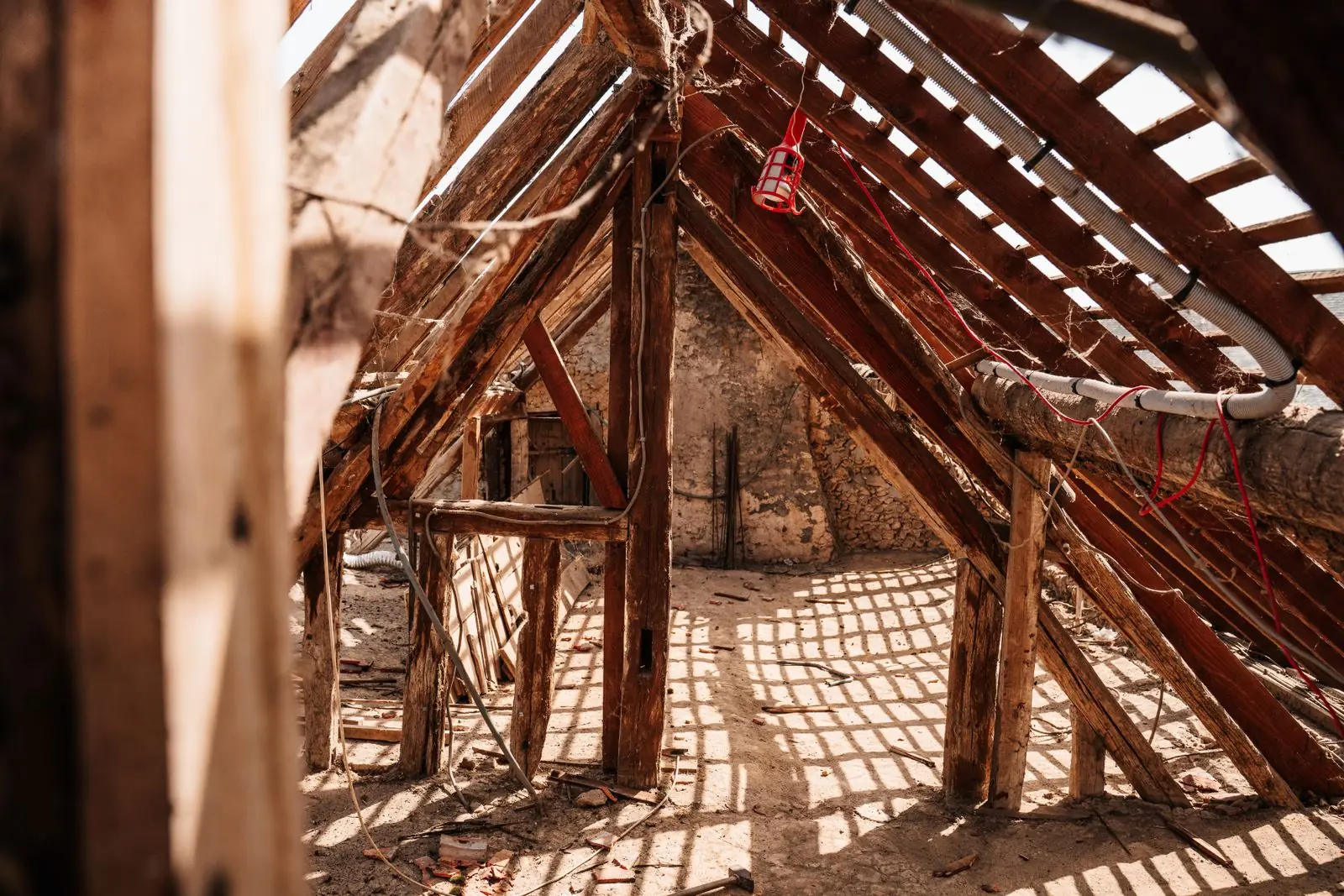
Need emergency attic water damage in Cibolo, TX? Call (888) 853-1821 to schedule an attic inspection.