
Roof Leak Attic Damage Restoration
Full interior attic restoration after roof leaks: wet insulation removal, structural drying of decking and framing, and ceiling repair.

Diagnose any attic leak, roof, plumbing or HVAC, stop the water at its source, then restore damaged materials.
Request an InspectionCall (888) 853-1821
Attic Leak Water Damage in Sanger, TX
Many Sanger homeowners meet their attic leak through the ceiling: a yellow-brown stain, a soft spot in the drywall, paint that bubbles after a heavy rain. The stain tells you water arrived, but it tells you nothing about where it came from or how long it has been traveling, and guessing wrong means paying for the wrong repair.
Our process treats every attic leak as a question first and a repair second. We examine the attic above the damage, follow moisture along framing members to the highest wet point, and read the patterns: rust trails point to roof fasteners, mineral deposits point to plumbing, overflow stains under an air handler point to condensate. Once the source in your Sanger home is identified and stopped, restoration of the insulation, wood, and ceiling can actually last.
An attic leak has three usual suspects. Roof sources include failed flashing, damaged shingles, cracked vent boots, and rotted decking, and they typically show up during or right after rain. Plumbing sources are supply lines, drain lines, or water heaters located in or above the attic, and they leak regardless of weather. HVAC condensate problems overflow from drain pans or clogged condensate lines, usually worst in summer when the system runs constantly. This matches what turns up in attics throughout Sanger.
In Sanger, diagnosis means reading the attic like a map: water trails on rafters point to the entry point, rust patterns on nails mark repeated wetting, mineral residue suggests plumbing water, and overflow staining beneath an air handler implicates the condensate drain. Moisture meters confirm how far the wetting spread in the Sanger attic, since guessing from the ceiling stain below is unreliable.
Tracing starts at the visible damage and works backward along the water's route. In the attic, we look for the highest point of moisture on framing members, because water runs downhill and the trail usually leads up to the entry. During or immediately after rain is the best time to inspect a suspected roof leak in Sanger, since active dripping and wet paths are visible.
Different leaks leave different evidence. A roof leak shows as staining on the underside of decking and water trails running down rafters from above. A plumbing leak often appears as localized soaking with no weather pattern, sometimes with mineral deposits where water has evaporated repeatedly. Condensate overflow pools under or around the air handler. We document each finding, confirm with moisture readings, and only then recommend a repair scope, because treating the wrong source is the most expensive mistake in attic water damage work for Sanger homeowners.
Always. This is the single most important rule of attic water damage in Sanger: no insulation, drywall, or framing repair should be finalized while water is still getting in. Stopping the source might mean a roofer fixing flashing, a plumber repairing a supply line, or an HVAC technician clearing a condensate drain. Our job is the damage the water caused, but the repair only holds once the source is resolved.
The sequence we follow is source first, extraction and drying second, restoration last. In practice that means Sanger homeowners sometimes need two trades: the source specialist and MH Attics for the interior restoration. We can document the damage and its likely source for the other contractor, and we hold off on closing up walls, ceilings, and insulation until the attic stays dry, because reopening finished work costs far more than waiting for confirmation.
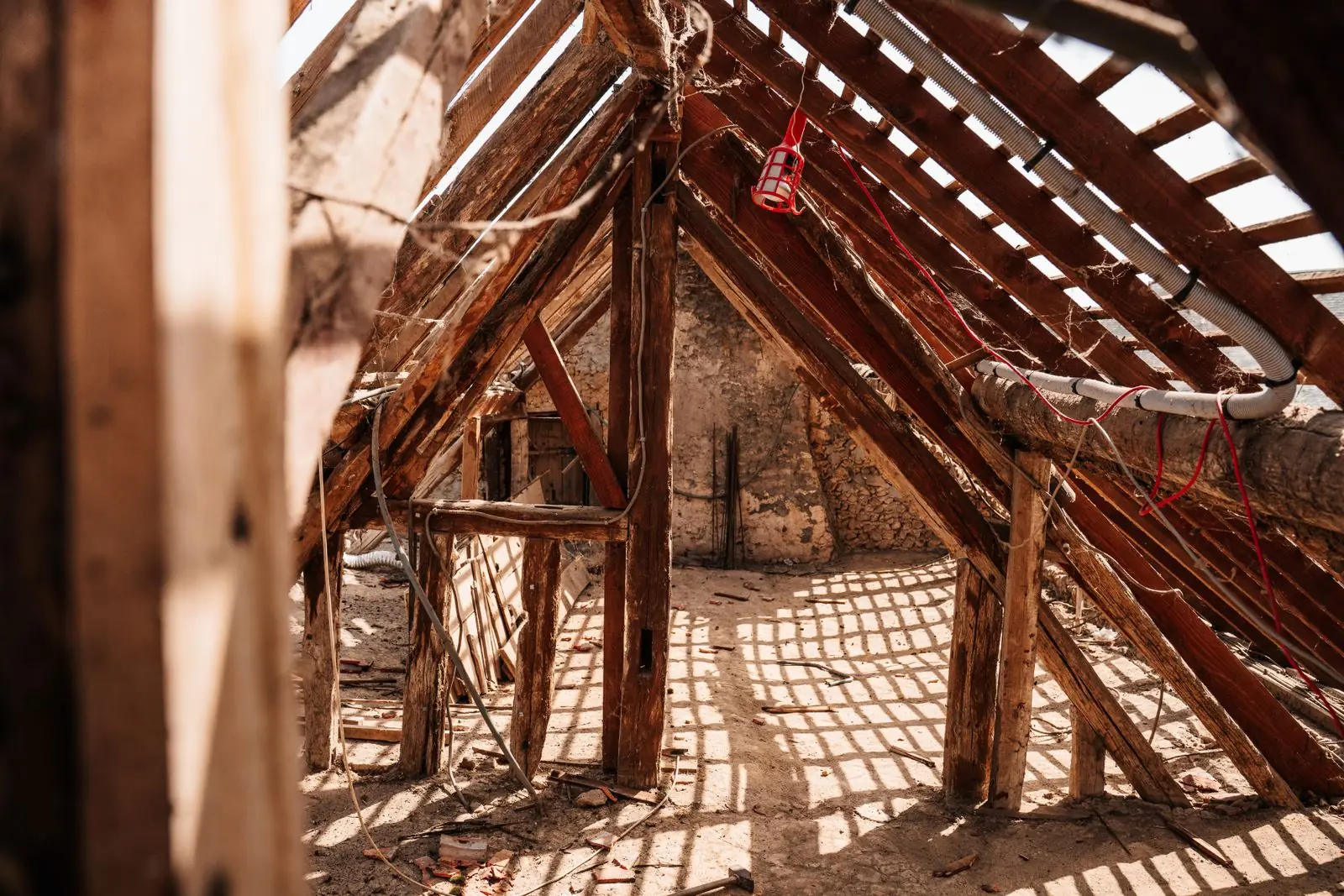
Long before a ceiling shows damage, the attic shows it. Wet or matted insulation is usually the first sign, followed by dark staining on the underside of roof decking and water trails down rafters. Fasteners and metal connectors may show rust, and wood framing can feel damp or look darker along the water's path. In Sanger homes, a musty odor in the attic on humid days is another early indicator that moisture is present.
Catching these signs early changes the job dramatically. Insulation dried within days can sometimes be saved, and framing that is only surface-wet dries quickly with airflow. Wait until the ceiling stains, and you are usually looking at saturated insulation, softened decking, and drywall replacement. That is why a quick attic check after any known leak event, heavy storm, or plumbing scare in your Sanger home is worth the effort.
Yes, and it often does. A single attic leak in Sanger can soak insulation, stain roof decking, wet rafters and ceiling joists along its path, and finally damage the ceiling drywall in the room below. If the leak runs through a wall cavity on its way down, it can affect wall framing and insulation too. The visible ceiling stain is just where the water finally stopped.
This is why the restoration scope has to follow the full water path, not just the obvious damage. We map every wet material in the attic and the rooms below it, because repairing only the ceiling while leaving soaked insulation above guarantees the insulation keeps feeding moisture to the framing. A complete job addresses the source, the structure, the insulation, and the finished surfaces as one connected repair. That complete scope is what Sanger homeowners are actually paying for.
Full interior attic restoration after roof leaks: wet insulation removal, structural drying of decking and framing, and ceiling repair.
Assess ceiling stains, bubbling paint and sagging drywall from both sides, then repair the leak and the ceiling.
Fast standing-water removal for Sanger attics using pumps and wet vacuums, plus guidance on what drying and cleanup follow next.
Complete attic water damage cleanup for Sanger homes: debris and damaged-material removal, surface sanitizing, and preparation for the drying phase.
Controlled structural drying for Sanger attics using air movers, dehumidifiers, and daily moisture-meter monitoring to verified dry goals.
Condensation or roof leak? How to tell what is wetting your attic.
A stained ceiling with no visible leak usually means trouble in the attic above.
Ten common reasons attics keep getting wet, and how to break the cycle.
If there is no rain, the likely sources in a Sanger home are plumbing or HVAC. A supply or drain line running through the attic can leak steadily, and a clogged HVAC condensate drain pan can overflow, especially in summer when the system runs hard. We inspect the attic to determine which system is responsible before any repair is planned.
Roof leaks in Sanger typically appear during or right after rain and show as water trails running down rafters from above. Plumbing leaks show no weather pattern and may leave mineral deposits where water repeatedly evaporates. An attic inspection during or after rain, combined with moisture meter readings, usually settles the question quickly.
Yes. Intermittent leaks, wind-driven rain entering flashing, a condensate drain that only overflows on the hottest days, a plumbing joint that only seeps under pressure, are common in Sanger attics. We look for the evidence they leave behind: staining patterns, rust trails, and residue marks that remain visible even when the leak is not active.
It depends on the cause and your policy. Sudden, accidental events like storm damage are often covered, while slow leaks from maintenance issues may not be. For your Sanger home, we document the source, the extent of damage, and the restoration scope in writing, which gives your adjuster a clear basis for the claim decision.
Need attic leak water damage in Sanger, TX? Call (888) 853-1821 to schedule an attic inspection.