Attic Leak Water Damage
Diagnose any attic leak, roof, plumbing or HVAC, stop the water at its source, then restore damaged materials.

Assess ceiling stains, bubbling paint and sagging drywall from both sides, then repair the leak and the ceiling.
Request an InspectionCall (888) 853-1821
Ceiling Damage Caused by Attic Leaks in Sanger, TX
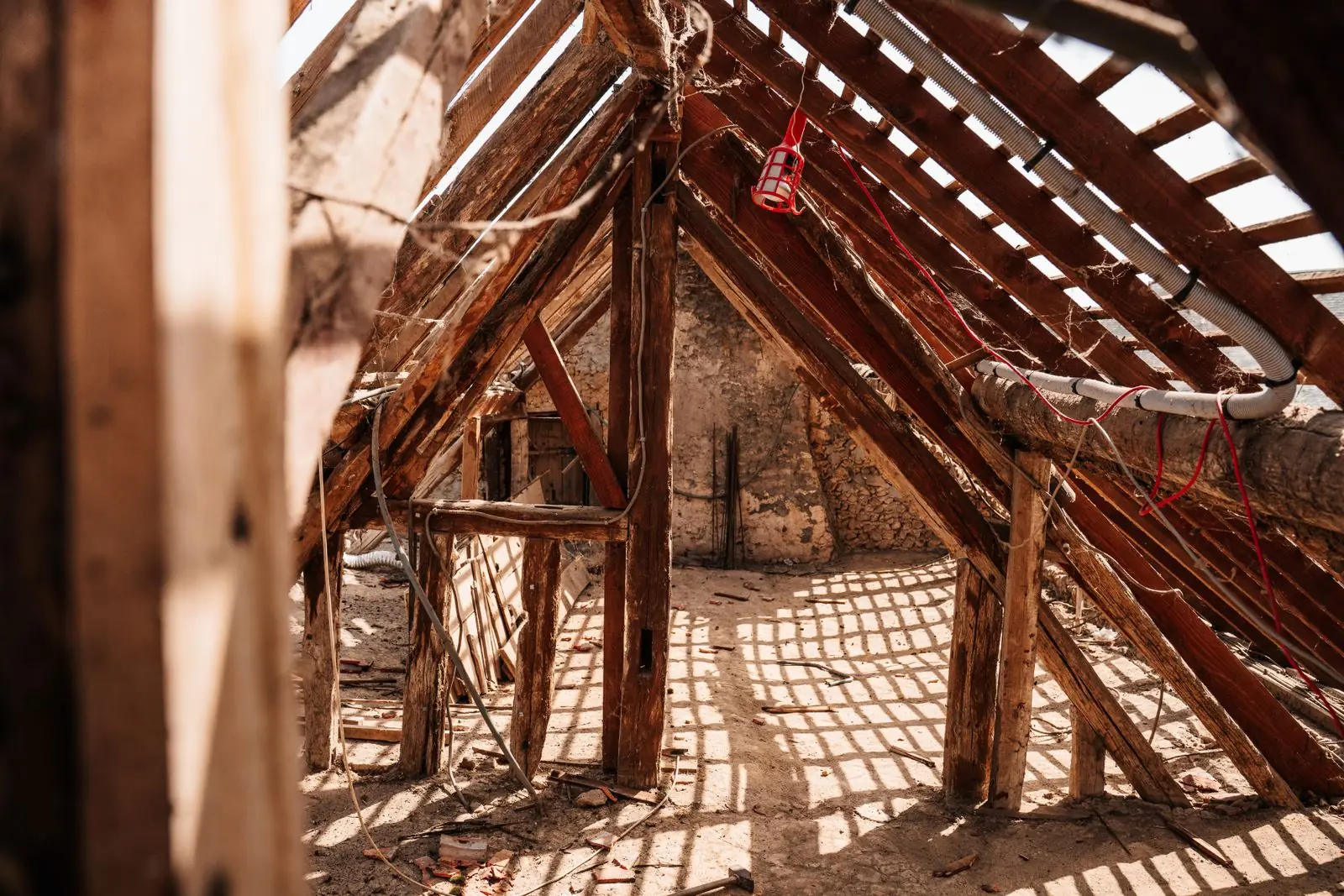
Water reaches a Sanger ceiling by traveling down through the attic: along rafters, across the tops of ceiling joists, and into the drywall from above. The stain pattern on the ceiling often maps that journey, spreading wider than the actual leak point and sometimes appearing in a different room than the attic entry. Following it back up is the only way to scope the repair correctly.
Our work on ceiling damage starts with that upward trace. We open the attic, find where the water entered, document what it soaked on the way down, and then repair the full chain: leak source, attic materials, and finally the ceiling itself. Homeowners in Denton County get one coordinated repair instead of a patched ceiling with a wet attic still sitting above it. It is a common finding in Sanger homes after roof leaks and storms.
Ceiling damage from attic leaks follows a recognizable progression: a faint yellow or brown stain with irregular edges mapping the water's spread, then paint bubbling and peeling as water pushes through from behind. In advanced cases the drywall softens, sags between joists, and can collapse if the saturated panel gives way. This matches what turns up in attics throughout Sanger.
In Sanger homes, the damage pattern tells a story: a stain centered under one spot suggests a leak directly above, while a long spreading stain suggests water traveling along joists before breaking through. Reading these patterns during assessment points back to the leak source, which determines whether the repair is a simple ceiling patch or a full attic restoration with ceiling work attached. Sharing those readings with your Sanger contractor keeps everyone working from the same facts.
It depends on how wet the drywall got. A light surface stain in a Sanger home, where the attic above is already dry and the drywall is firm to the touch, can often be sealed with a stain-blocking primer and repainted. But drywall that feels soft, sags, or crumbles at the edges has a saturated gypsum core that will not recover its strength, and no amount of paint fixes that.
The deciding test is simple: press the stained area gently. If it is solid and dry, cosmetic repair may be enough. If it gives, flexes, or feels spongy, the panel needs to come out. We also check the attic side, because drywall that looks borderline from below often shows clear saturation from above. Replacing a compromised panel is cheaper than repairing it twice, and it lets us inspect and dry the joists and insulation hidden behind it. We give Sanger homeowners a straight answer either way.
Because the ceiling hides the bigger problem. From the room below, a Sanger homeowner sees a stain; from the attic above, the same leak shows as soaked insulation, water trails on joists, and possibly an active drip that has not stopped. Assessing only from below is like diagnosing a roof from inside the house: you see the symptom and miss the cause.
The attic-side inspection answers the questions that determine the real scope. Is the leak still active? How much insulation is wet? Are the ceiling joists holding moisture that would rot them if sealed in? We document all of it before any ceiling work begins, so the repair plan covers the leak source, the attic materials, and the ceiling as one job. That two-sided view is standard on every Sanger ceiling job we scope. Skipping this step is how homeowners end up repainting the same stain three times.
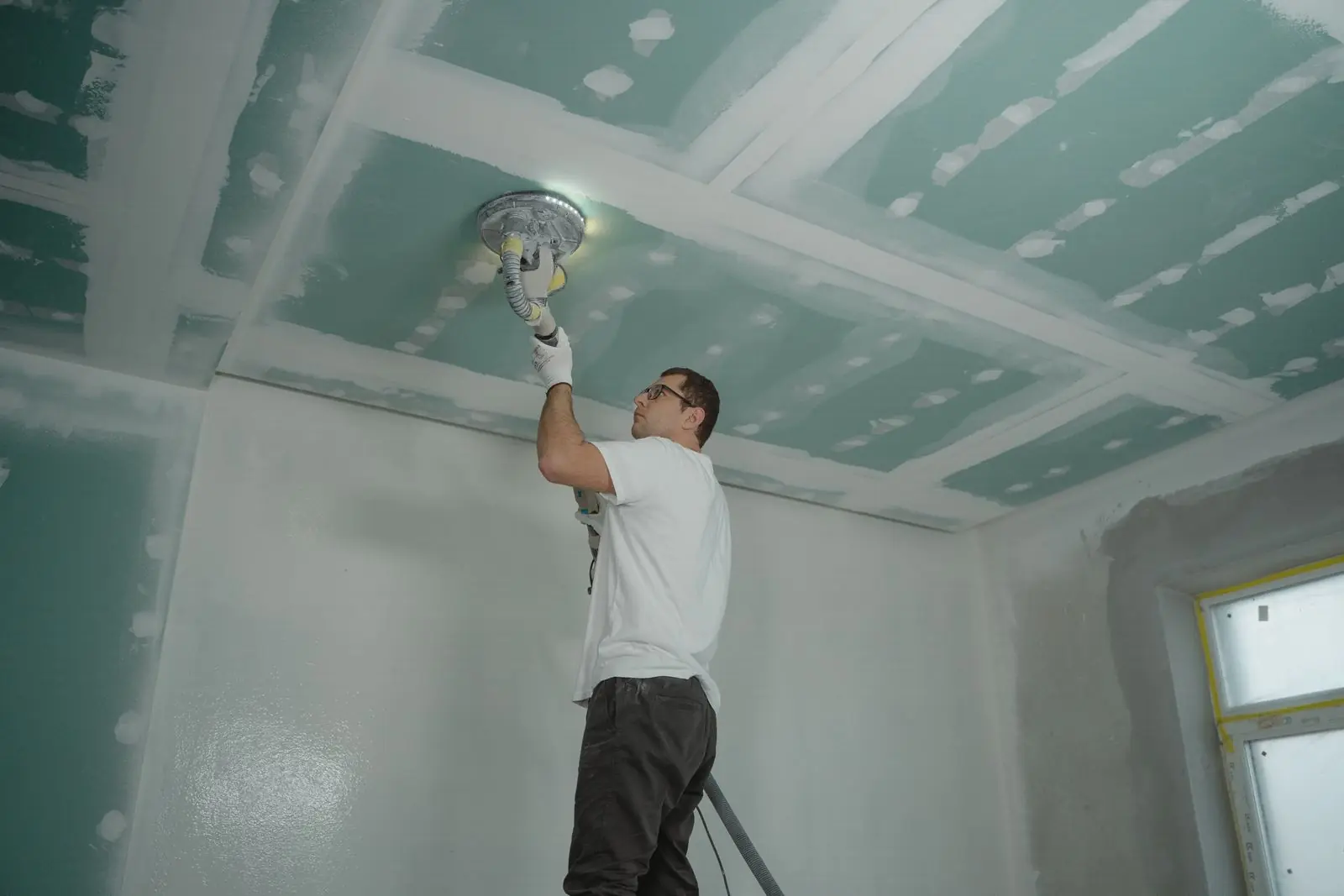
The repair follows a strict order. First, the attic leak source is fixed and the attic is dried and restored, because no ceiling work survives an active leak. Then the damaged drywall is cut out back to solid, dry material, the exposed joists and insulation are inspected and dried, and new drywall is hung, taped, mudded, and finished to match the surrounding ceiling. This matches what turns up in attics throughout Sanger.
In Sanger, most ceiling repairs from attic leaks take a few days once the attic is dry: one day for removal and prep, one for hanging and taping, and a day or two for mudding, sanding, and finishing. Larger collapses or multi-room damage take longer. We keep the work area contained so dust and debris do not spread through the house, and the finished ceiling is primed with stain-blocking primer before paint so old water marks cannot bleed through. We keep Sanger homeowners updated at each stage so there are no surprises.
It gets worse in every direction. The stain spreads as water keeps traveling, the drywall keeps softening until it sags or falls, and the attic above keeps accumulating damage: soaked insulation, damp joists, and conditions where mold can grow on wet wood. In Sanger, where warm attics accelerate that growth, a ignored stain can turn a ceiling patch into a full attic restoration within a single season.
There is also a weight factor most homeowners do not consider. Saturated drywall is heavy, and a sagging panel can pull on fasteners and adjoining panels, widening the repair area. What starts as a two-foot stain can become a collapsed section taking light fixtures or trim with it. Catching it early saves a Sanger homeowner from that escalation. An assessment now is the cheapest version of this repair you will ever get.
Diagnose any attic leak, roof, plumbing or HVAC, stop the water at its source, then restore damaged materials.
Full interior attic restoration after roof leaks: wet insulation removal, structural drying of decking and framing, and ceiling repair.
Full attic restoration for Sanger homes: rebuilding damaged framing, decking, and drywall, then installing new insulation to reach pre-loss condition.
Complete attic water damage cleanup for Sanger homes: debris and damaged-material removal, surface sanitizing, and preparation for the drying phase.
Controlled structural drying for Sanger attics using air movers, dehumidifiers, and daily moisture-meter monitoring to verified dry goals.
A stained ceiling with no visible leak usually means trouble in the attic above.
Spot attic water damage before it reaches your ceiling with these warning signs.
What a roof leak does to your attic, and what needs to happen next.
Only if the drywall is firm, fully dry, and the leak above is fixed. In a Sanger home, painting over an active leak or still-damp drywall traps moisture and the stain will bleed back through within weeks. We check the attic side first to confirm the source is stopped and the material is dry before any cosmetic repair.
Warning signs include visible sagging between joists, drywall that feels soft or spongy to a light touch, and cracking or bulging tape seams. In Sanger, a ceiling showing these signs should be assessed promptly, because saturated drywall can fail suddenly. We can evaluate the panel and the attic above it to determine how urgent the repair is.
Usually yes. Insulation above a stained Sanger ceiling has almost always absorbed water, which collapses its loft and thermal performance. Wet insulation also holds moisture against the joists and the back of the drywall. We remove the affected insulation during the repair so the new ceiling goes up over a dry, clean cavity.
Yes. Replacement drywall is taped, mudded, and finished to blend with the surrounding surface, and texture is matched to the existing ceiling before priming and painting. In Sanger homes with textured or popcorn-style ceilings, we take care to match the pattern so the repair does not stand out.
Need ceiling damage caused by attic leaks in Sanger, TX? Call (888) 853-1821 to schedule an attic inspection.